Heathrow Express Vs Elizabeth Line: Which Is Better?
The Complete Answer: Heathrow Express vs Elizabeth Line — Which Should You Choose?
If you're landing at Heathrow and wondering whether to take the Heathrow Express or the Elizabeth Line, the answer comes down to one question: where exactly are you going in London? The Heathrow Express is a premium, non-stop service that gets you to Paddington Station in about 15 minutes, while the Elizabeth Line is a modern commuter train that costs significantly less and serves more of central London directly. For most travellers, especially those heading to the City, Canary Wharf, or the West End, the Elizabeth Line is the smarter choice.
What This Guide Covers
This guide breaks down the key differences between the two rail services connecting Heathrow Airport to central London. We'll compare journey times, costs, stations served, and the overall passenger experience so you can choose the right option for your trip.
Quick Answer: The Heathrow Express is faster (15 minutes to Paddington) but costs a premium. The Elizabeth Line is cheaper, uses Oyster/contactless, and connects to more central London destinations like Tottenham Court Road, Liverpool Street, and Canary Wharf.
Key Takeaways
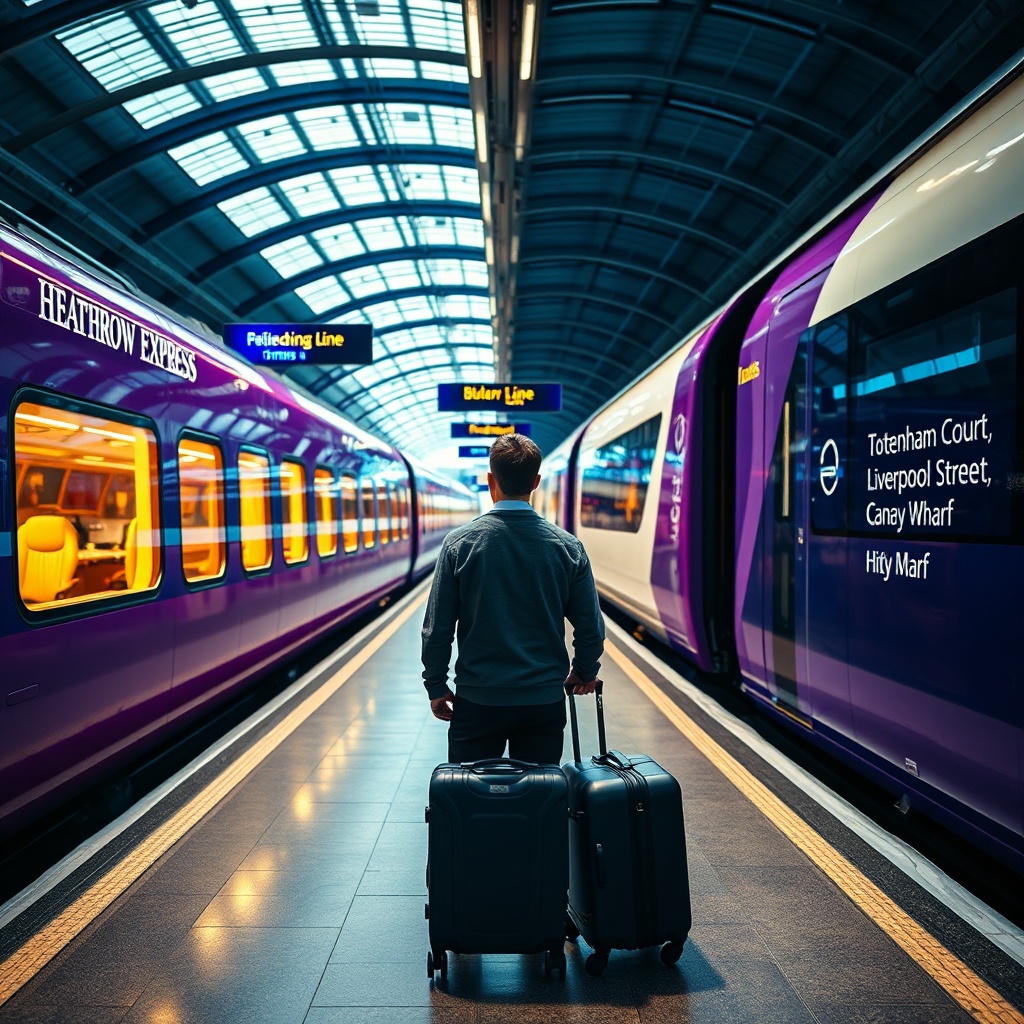
A visual side-by-side of the two rail services, highlighting the key differences in speed, cost, and destinations.
- Heathrow Express is faster to Paddington, taking around 15 minutes non-stop, but it's a premium service with a higher price.
- Elizabeth Line is cheaper and more integrated with the TfL network, meaning you can use Oyster or contactless pay-as-you-go.
- The best choice depends on your final destination. If you're staying near Paddington, the Express is ideal. If you're heading to the City, East London, or Canary Wharf, the Elizabeth Line is more direct.
- The Elizabeth Line is the better all-round choice for most travellers, particularly budget-conscious ones, families, and those with destinations beyond Paddington.
Speed vs Cost: The Core Trade-Off
The fundamental decision between these two trains is a trade-off between speed and cost. The Heathrow Express offers a premium, time-saving journey, while the Elizabeth Line offers a more affordable, integrated service.
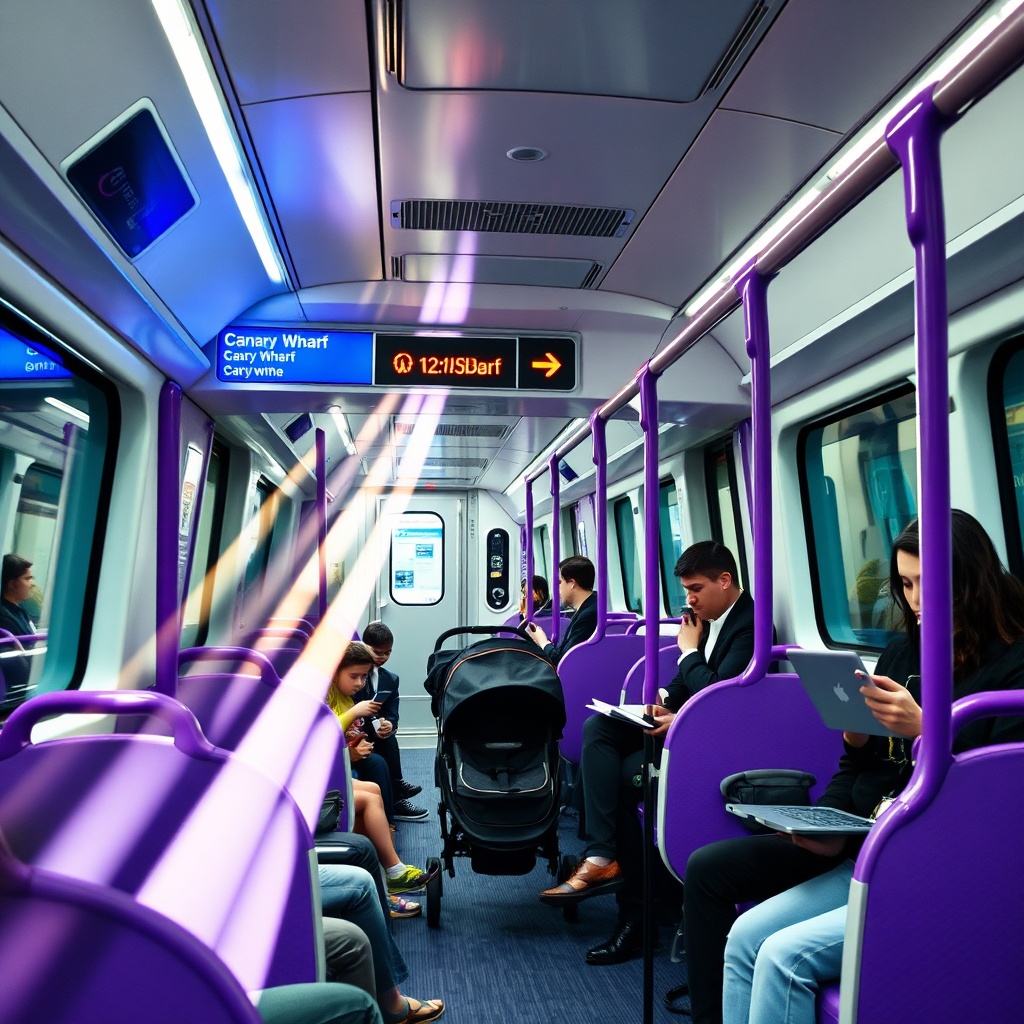
A passenger-centric view of the Elizabeth Line, showcasing its modern design and appeal to budget-conscious and diverse travelers.
Journey Times Compared
The Heathrow Express is the fastest way to get from the airport to central London. It runs non-stop from Heathrow Central (Terminals 2 and 3) to Paddington in approximately 15 minutes. The journey from Terminal 5 adds a few minutes.
The Elizabeth Line is slower but serves more destinations. From Heathrow to Paddington, it takes around 30 minutes. However, its key advantage is that it continues past Paddington to major hubs like Tottenham Court Road (about 35 minutes), Farringdon (about 40 minutes), Liverpool Street (about 45 minutes), and Canary Wharf (about 50 minutes). This means you can reach these areas without a transfer.
Price Differences and Ticketing Options
The pricing structures of the two services are very different. The Heathrow Express uses a separate ticketing system with its own fares, which are significantly higher than standard London transport fares. You can often get cheaper tickets by booking online in advance.
The Elizabeth Line is part of the Transport for London (TfL) network, so you can use an Oyster card, a contactless bank card, or a TfL Travelcard. Fares are calculated based on the zones you travel through, and there is a daily cap, which is a major benefit for travellers making multiple journeys in one day.
Definition: An Oyster card is a smart card used for travel on London's public transport network (including the Elizabeth Line). You can also use contactless bank cards or mobile devices for pay-as-you-go travel.
The Hidden Cost of Time
The Express's speed advantage is only valuable if Paddington is your final destination or you're catching a train from there. If your hotel or meeting is in the City or Canary Wharf, you need to factor in the time and cost of a Tube or taxi transfer from Paddington.
For example, a journey to Liverpool Street using the Express requires a transfer to the Circle, Hammersmith & City, or Metropolitan lines at Paddington, adding 15-20 minutes. The Elizabeth Line takes you there directly in a single ride. Therefore, the total door-to-door time can often be similar, or even faster with the Elizabeth Line for East London destinations.
Where You're Going: Matching the Service to Your Destination
Your final destination is the most important factor in this decision. Let's match the service to where you need to be.
Paddington and West London: The Express's Home Turf
If you're staying at a hotel near Paddington Station or need to catch a connecting National Rail train from Paddington (for example, to Oxford, Bristol, or South Wales), the Heathrow Express is the clear winner. It drops you right at the station, saving you time and hassle.
The Elizabeth Line also stops at Paddington, so you can still get there, but the journey takes longer. The Express is the superior option for this specific destination.
The Elizabeth Line's Central London Coverage
The Elizabeth Line's biggest advantage is its direct route through the heart of central London. It stops at Tottenham Court Road (for the West End and Oxford Street), Farringdon (for the City and Barbican), Liverpool Street (for the City and Shoreditch), and Canary Wharf.
This eliminates the need for a Tube transfer, which is a huge benefit for anyone with luggage or travelling with a group. It provides a more seamless and direct journey to some of London's most important business and tourist districts.
Terminal-Specific Considerations
Both services stop at all the main Heathrow terminals, but there are slight differences. The Elizabeth Line stops directly at Terminals 2 and 3, Terminal 4, and Terminal 5. The Heathrow Express calls at Heathrow Central (Terminals 2 and 3) and Terminal 5; passengers for Terminal 4 need to use a free shuttle service from Heathrow Central.
This means the Elizabeth Line is more convenient if you're arriving at Terminal 4, as you won't need to transfer.
The Passenger Experience: Comfort, Luggage, and Connections
Both services offer a comfortable journey, but there are differences in the onboard experience and how they connect to the rest of London's transport network.
Onboard Comfort and Seating
The Heathrow Express is designed as a premium service, offering a quieter and more spacious environment. Seats are comfortable and can be reserved or booked with specific seat preferences, and there's ample space for luggage.
The Elizabeth Line is a modern commuter train. It's comfortable, with good luggage space, but during peak hours (roughly 7-9am and 5-7pm on weekdays) it can get busy, and you may have to stand. Both trains offer Wi-Fi and power outlets at seats.
Accessibility and Family-Friendly Features
Both services are fully step-free from platform to train, making them accessible for wheelchairs, prams, and passengers with reduced mobility. There is dedicated space for wheelchairs and large luggage on both trains.
For families, the Elizabeth Line is often the more practical choice due to its lower fares. The cost savings can be significant when travelling with children, and the more frequent service means less waiting on the platform with little ones.
Connecting to Other Transport Modes
Both Paddington and the Elizabeth Line's central stations are major transport hubs.
- Paddington Station: Offers connections to the London Underground (Circle, District, Bakerloo, and Hammersmith & City lines), National Rail services, and a taxi rank.
- Tottenham Court Road: Offers connections to the Northern and Central lines, and is a central location for taxis.
- Farringdon: Offers connections to the Circle, Hammersmith & City, and Metropolitan lines, and National Rail services (Thameslink).
- Liverpool Street: Offers connections to the Central, Circle, and Hammersmith & City lines, and National Rail services to East Anglia.
- Canary Wharf: Offers connections to the Jubilee line and the DLR.
Step-by-Step: How to Choose the Right Service for Your Trip
- Identify your final destination in central London — your hotel, office, or meeting point.
- Check if your destination is within a 10-minute walk of Paddington — if yes, the Express is likely the fastest option.
- If your destination is near Tottenham Court Road, Farringdon, Liverpool Street, or Canary Wharf, the Elizabeth Line is the most direct choice.
- Compare total journey time from your terminal to your final destination, not just the train ride itself.
- Consider your budget — factor in the price difference and whether you're travelling alone or with a group.
- Check the frequency of each service at your travel time (early morning or late night).
- Make your decision — if you have time and want to save money, the Elizabeth Line is the better all-round choice; if speed is paramount and you're heading to Paddington, take the Express.
Comparison Table: Heathrow Express vs Elizabeth Line at a Glance
| Feature | Heathrow Express | Elizabeth Line |
|---|---|---|
| Journey time to central London | ~15 minutes (non-stop to Paddington) | ~30-45 minutes (multiple central stops) |
| Main central London terminal | Paddington | Paddington, Tottenham Court Road, Farringdon, Liverpool Street, Canary Wharf |
| Frequency | Every 15 minutes | More frequent (every few minutes at peak times) |
| Ticketing system | Separate tickets (advance/online discounts available) | Oyster, contactless, TfL fares |
| Price (single adult) | Higher — premium service | Lower — standard TfL fare |
| Direct stops at Heathrow terminals | T2/T3 and T5 (T4 served via shuttle) | T2/T3, T4, and T5 |
| Best for | Business travellers, tight connections, Paddington-based hotels | Budget-conscious travellers, direct access to East/Central London, families |
When the Express Is Worth the Premium
The Heathrow Express is a premium service, and its price is justified in specific circumstances.
Business Travel and Time-Sensitive Connections
If you're arriving for a meeting in the Paddington area, the Express is the most efficient option. It's also the best choice if you need to catch a connecting train from Paddington, as it saves you valuable minutes. For early morning or late evening travel when time is critical, the speed of the Express can be a significant advantage.
Group and Family Scenarios
While the Express is expensive, the cost difference is less of a burden for a small group of business travellers where time is money. When luggage is heavy, the non-stop journey reduces the need to handle bags during a transfer.
Situations Where the Express Falls Short
- If your destination is in the City or Canary Wharf — you'll need to transfer at Paddington, which negates the time advantage and adds cost.
- If you're on a tight budget — the 15-minute saving isn't worth the significant price premium, especially if your destination isn't at Paddington.
When the Elizabeth Line Is the Smart Choice
For the majority of travellers, the Elizabeth Line is the smarter choice. It offers a better balance of cost, convenience, and coverage.
Budget-Conscious and Repeat Travellers
Using Oyster or contactless on the Elizabeth Line provides a seamless, pay-as-you-go experience. You don't need to buy a separate ticket, and the daily cap on fares is a major benefit for anyone making multiple journeys during their stay.
Direct Access to the City and East London
If your hotel or office is near Liverpool Street, Farringdon, or Canary Wharf, the Elizabeth Line is the most direct option. It's a one-seat ride with no transfers, which is a huge advantage when you're tired from a flight and carrying luggage.
Larger Groups and Families
The lower fare per person makes a significant difference for families. The savings can be substantial, especially when combined with the more frequent service, which means less waiting on the platform with children.
FAQ
Is the Elizabeth Line cheaper than Heathrow Express?
Yes, the Elizabeth Line is significantly cheaper because it uses standard TfL fares with Oyster/contactless, while Heathrow Express charges a premium for its non-stop service. The exact price difference varies, but the Express is typically several times more expensive.
How much faster is Heathrow Express compared to the Elizabeth Line?
The Heathrow Express takes around 15 minutes to Paddington, while the Elizabeth Line takes roughly 30–45 minutes to reach central London destinations like Tottenham Court Road or Liverpool Street. However, the total journey time depends on your final destination.
Can I use my Oyster card on the Heathrow Express?
No, you cannot use Oyster or contactless on the Heathrow Express — it operates on a separate ticketing system. You can, however, use Oyster or contactless on the Elizabeth Line.
Which service is better for Terminal 5?
Both services serve Terminal 5 directly. However, the Elizabeth Line stops at Terminal 5 as part of its route, while the Heathrow Express also calls there. The Elizabeth Line may take slightly longer but is cheaper.
Do both trains run 24 hours a day?
No, neither runs 24 hours. The Heathrow Express runs from early morning to late evening, and the Elizabeth Line has similar operating hours with a night service on weekends. Check the specific timetable for your travel date.
Conclusion: The Bottom Line for Your Journey
- Choose Heathrow Express if you're heading to Paddington or need to catch a train from there, and you value speed over cost.
- Choose Elizabeth Line for almost every other central London destination, especially if you're watching your budget or travelling with a group.
- Always check your final destination first — the fastest train isn't always the fastest journey door-to-door.
- Consider the total cost of your trip — the savings on the Elizabeth Line can be substantial, especially for families or multiple trips during your stay.